Knee arthroscopy is a minimally invasive procedure used to diagnose and treat problems inside the knee joint. At Dr. Bhavesh Advanced Bone and Joint Clinic, Dr. Bhavesh Patidar provides personalised care for knee pain, sports injuries, ligament problems, and other conditions affecting knee movement.
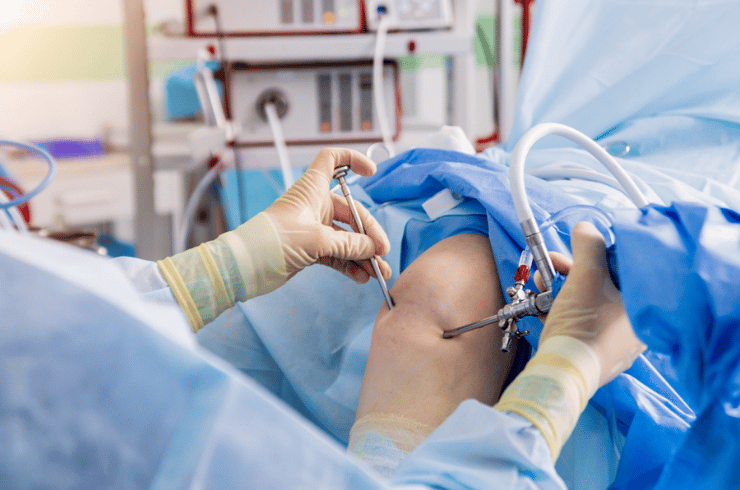
During arthroscopy, a small camera called an arthroscope is inserted through a tiny incision to view the inside of the knee. Specialised instruments can then be used through small openings to treat the identified problem while limiting disruption to surrounding tissues.
Knee arthroscopy may be recommended when symptoms persist despite appropriate non-surgical treatment. It can be used for several knee conditions, including:
Depending on the condition, knee arthroscopy may involve:
Knee arthroscopy uses small incisions and specialised instruments to access the joint. Depending on the procedure and individual condition, potential benefits may include:
The procedure is performed using an arthroscope connected to a camera. The surgeon views detailed images of the inside of the knee on a monitor and uses specialised instruments through additional small incisions to address the underlying problem.
The exact technique depends on the diagnosis. Meniscus repair, ligament reconstruction, cartilage treatment, and removal of loose tissue are examples of procedures that may be performed arthroscopically.
Recovery depends on the type of procedure performed and the patient’s individual condition. Some patients may begin movement soon after surgery, while procedures such as ligament reconstruction or meniscus repair may require a longer rehabilitation period.
A personalised rehabilitation programme may include physiotherapy, strengthening exercises, flexibility training, and gradual progression of activities. Following the recommended rehabilitation plan helps support recovery and restoration of knee function.
Dr. Bhavesh Patidar is an Orthopaedic Surgeon with qualifications including MBBS, MS Orthopaedics (Gold Medalist), DNB, MNAMS, FIASM, FIJR, and FIPM. His areas of practice include knee and shoulder arthroscopy, joint replacement, sports and ligament injuries, fracture care, and minimally invasive orthopaedic surgery.
Book your consultation today and take the next step toward better health.